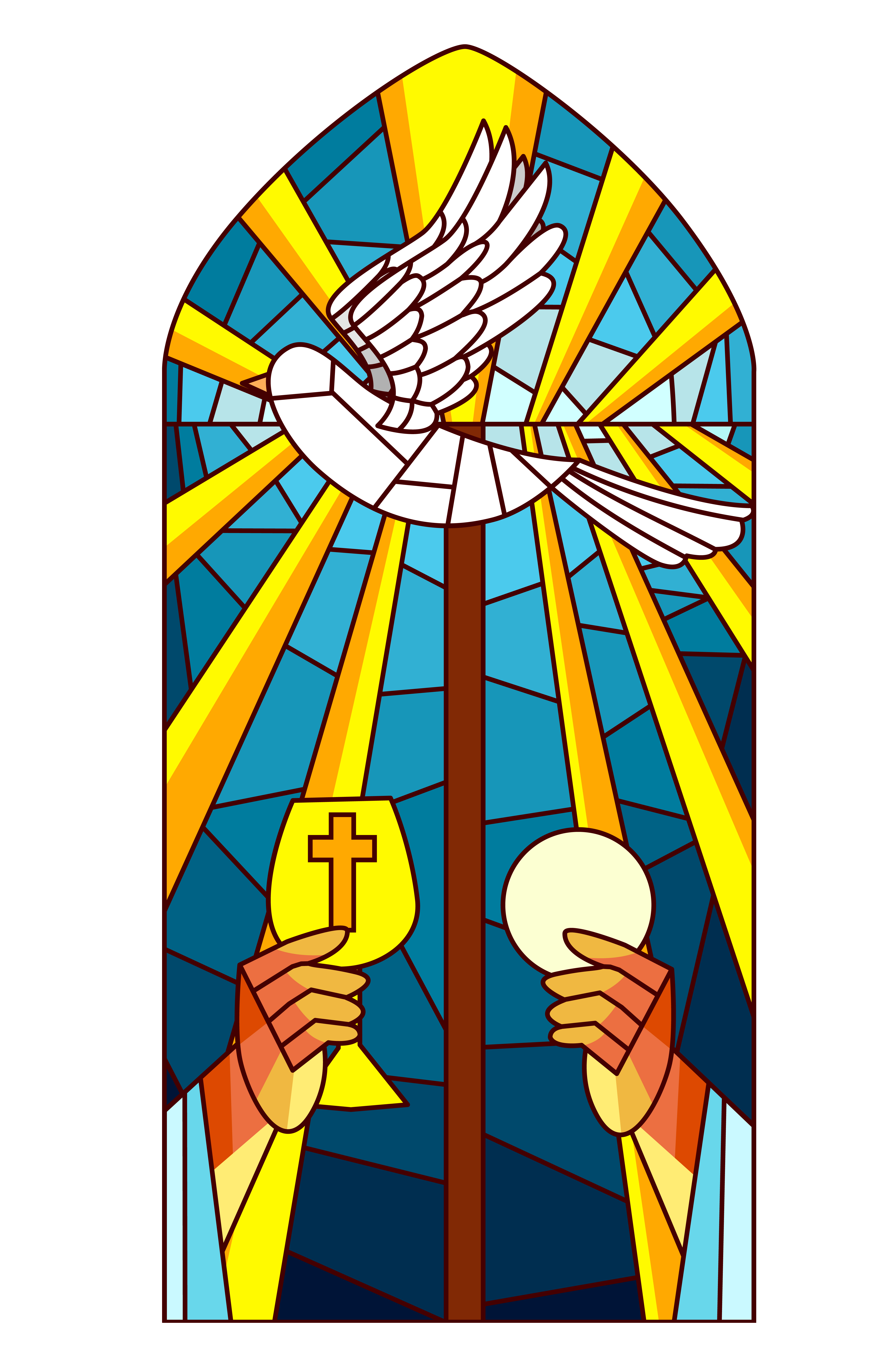
On the Holy Spirit
On the Holy Spirit: The Grammar of Divinity
The Indivisible Spirit: A Catholic Synthesis
“No one comprehends the thoughts of God except the Spirit of God.” Now God’s Spirit, who reveals God, makes known to us Christ, his Word, his living Utterance, but the Spirit does not speak of himself. the Spirit who “has spoken through the prophets” makes us hear the Father’s Word, but we do not hear the Spirit himself. We know him only in the movement by which he reveals the Word to us and disposes us to welcome him in faith. the Spirit of truth who “unveils” Christ to us “will not speak on his own.” Such properly divine self-effacement explains why “the world cannot receive (him), because it neither sees him nor knows him,” while those who believe in Christ know the Spirit because he dwells with them. -Catechism of the Catholic Church, 2nd ed., §687, Libreria Editrice Vaticana (online edition).
A properly biblical and Catholic account of the Holy Spirit does not treat the Spirit’s divinity as a detachable thesis propped up by one clever verse. It receives Scripture as a coherent whole and reads it with the Church’s settled doctrinal grammar in view because these issues are historical and developed dogmatically if you will. This grammar begins with a boundary the Bible treats with a similar non-negotiable tone: the difference between the uncreated Creator and every created thing, such that worship cannot be transferred from the one who is unmade to what is made without idolatry. [i] Romans 1:25 states this boundary with unusual conceptual clarity, and it will be used here as a summary formulation rather than as the only possible statement of the rule. Within that boundary, Scripture’s divine names cannot be flattened into creaturely titles, and what belongs properly to God, the one Godhead, divine sanctification, divine kingship, divine indwelling, divine creative life, and the divine confession that constitutes baptismal belonging, cannot be ascribed to a creature without collapsing the Creator–creature distinction. [ii]
At the same time, Christian speech must also be disciplined about how the term “God” functions once the Church has come to grips with Scripture’s own criteria for true deity and stabilized its confession in a Trinitarian key. In that stabilized usage, “God” does not function as a proper name for one person alongside two others, but as the name for the one divine nature, which is wholly and simply the same divine essence in the Father, the Son, and the Holy Spirit, while the personal “who” is secured by relations of origin rather than by parts or degrees. [iii] This clarification is not in tension with Scripture’s recognition that “god/gods” can be used in several senses. It is a guardrail so modern readers do not mistake “God” for “the Father” as a proper name, while also preventing readers from trying to decide true deity by the mere sound of the word “god.”
The two sections that follow perform complementary tasks. Section I builds a canonical portrait by gathering the identity claims of the Spirit across Scripture as a convergent profile. Section II offers a disciplined classificatory defense in the style of Gregory of Nyssa: it takes Scripture’s own recognition that the bare word “god” can be used equivocally, blocks semantic evasions, and forces a classification of the Spirit on the divine side of the Creator–creature line. Taken together, the portrait supplies breadth and cumulative force, while the defense supplies rigor and decision.
Section I. The Scriptural Web: A Canonical Portrait of the Spirit
This piece draws together independent strands of biblical witness that converge on a single result about the Spirit. It does not rest the case on one proof text. It shows that Scripture habitually and consistently places the Holy Spirit where only God can be placed, assigns to the Spirit what belongs properly to God, and treats communion with the Spirit as belonging to the very confession and worship that identify the living God. The force is cumulative: no single strand bears the whole weight, because the whole pattern bears the conclusion.
First, the Spirit is placed within the Church’s foundational confession. Baptism incorporates the Church into the confession “in the name of the Father and of the Son and of the Holy Spirit,” and this triadic placement is not presented as God plus a creaturely assistant but as the basic ecclesial act of belonging to the living God (Matthew 28:19). Much has been debated about how far one should press the singular “name” as an argument by itself, and the present account does not rise or fall on that grammatical point. What matters here is the canonical placement (a cannon made by the Catholic Church under guidance and through the Spirit): the Spirit is co-named with Father and Son in the Church’s initiatory confession. In the apostolic benediction, the Spirit is not appended as a creaturely helper but placed where only God can be placed, as the giver of communion that belongs to the divine life itself (2 Corinthians 13:14). This placement is not merely liturgical ornamentation. It is confirmed by direct apostolic speech that identifies lying to the Holy Spirit with lying to God, not as a poetic comparison but as a classificatory judgment about whom the sin has addressed (Acts 5:3–4).
Second, the Spirit is identified with the divine indwelling that marks God’s own presence. The people of God are called God’s temple precisely because God’s Spirit dwells in them, and the indwelling that makes the temple holy is treated as divine (1 Corinthians 3:16–17). The same logic is applied personally: the individual body is a temple of the Holy Spirit, not as a metaphor for moral improvement, but as the reality of divine inhabitation (1 Corinthians 6:19). In other words, the Spirit is not presented as a created influence that happens to be near God; the Spirit is the one whose presence constitutes God’s holy dwelling.
Third, Scripture attributes to the Spirit divine prerogatives that exceed creaturely categories. The Church’s confession names the Spirit as “Lord,” not merely as a polite title of address, but in the full doxological sense that marks divine lordship. This is not made to carry the whole argument by itself, nor is it read in a way that collapses the persons. Rather, within the wider canonical pattern already established, it functions as a confirming strand: the Spirit is spoken of in the register of divine lordship within the one inseparable divine operation confessed of Father, Son, and Spirit (2 Corinthians 3:17). Scripture also speaks of an “eternal Spirit” in connection with Christ’s saving offering. The phrase has interpretive range when isolated, but in the present argument it is not treated as a standalone proof. It is received as one strand within a wider canonical pattern of ascribing to the Spirit what belongs to God rather than to the created order, and the argument does not rise or fall on this text (Hebrews 9:14). The Spirit’s presence is treated as absolute in a way that parallels God’s own omnipresence, such that flight from God’s Spirit is as impossible as flight from God (Psalm 139:7–10). The Spirit searches “even the depths of God,” indicating a knowledge of God that is not external observation but an interior divine knowing that belongs on the Godhead side of the line (1 Corinthians 2:10–11).
This is why the New Testament can speak with an interchange of indwelling language: “Spirit of God,” “Spirit of Christ,” “Christ in you,” and “the Spirit who dwells in you” are coordinated in a way that argues for the unity of divine presence and action, not for the erasure of personal distinction (Romans 8:9–11). The Spirit acts with personal agency and sovereign freedom, apportioning gifts “as he wills,” which is not the language of a mere instrument but of personal lordship in the distribution of divine gifts (1 Corinthians 12:11). The Spirit intercedes “according to God,” with a mind aligned to God, which again places the Spirit within divine intentionality rather than among created mediators (Romans 8:26–27). And the Spirit acts as personal guide who speaks, teaches, and glorifies the Son, sharing in the Father–Son possession of “all things,” not as a third party outside God but as one who belongs within the divine economy that the Son describes as common to Father and Son (John 16:13–15).
Fourth, Scripture locates the Spirit in creation and in the new creation in a way that belongs to God’s own work. The Spirit is present and active at the outset of the cosmos, not as a later addition but as a divine actor at the beginning (Genesis 1:2). Creation and the giving of life are attributed to God’s Spirit, describing the Spirit as life giver in the same causal register Scripture uses for God’s own creating action (Psalm 104:30). The Spirit of God “has made” the human person, again placing the Spirit in the creative act rather than in the created order (Job 33:4). The Spirit’s action is also identified with the power of the Most High in the mystery of the Incarnation, not as a comparison but as a parallelism that identifies the Spirit’s agency with divine action proper (Luke 1:35). The Spirit effects new birth with sovereign freedom, in a register that belongs to divine causality rather than to created causation (John 3:5–8).
Fifth, Scripture treats the Spirit as personally present in covenant history and ecclesial life. The Spirit can be “grieved,” which signals personal agency and covenantal relation rather than impersonal force (Ephesians 4:30). This is continuous with the Old Testament’s account of rebellion against God’s Holy Spirit and the Spirit’s covenant guiding presence, including the Spirit’s leading and giving rest, functions that belong to the Lord’s own saving action (Isaiah 63:10–14). The continuity is such that what Isaiah attributes to the Lord’s speech can, in Acts, be attributed to the Holy Spirit speaking through Isaiah, treating the Spirit as the divine speaker of Scripture rather than as a merely mechanical influence (Acts 28:25–27; Isaiah 6:9–10).
Finally, Scripture contains triadic patterns that place the Spirit within the one divine economy of gifts and operations, not as a creature alongside God but as inseparably coordinated with “Lord” and “God” in the Church’s life (1 Corinthians 12:4–6; Ephesians 4:4–6). The “Spirit of the Lord” appears throughout the biblical narrative as the mode of God’s own active presence, empowering, consecrating, and revealing in a way that belongs to God’s own action (Judges 14:6; 1 Samuel 16:13; Isaiah 11:2). The Spirit speaks as the divine author of prophetic speech, not merely as an atmosphere around the prophet (2 Samuel 23:2). The Spirit is the authoritative voice in the churches, addressing the ecclesial body with divine authority (Revelation 2:7). The Spirit also speaks with the Church in the final summons of Scripture, giving voice to the eschatological invitation together with the Bride (Revelation 22:17). And sanctification is named as the Spirit’s proper work in the saving act of God, which is decisive because sanctification belongs to God’s own holiness and cannot be delegated to a creature without collapsing the line Scripture polices between God and what is made (1 Peter 1:2; 2 Thessalonians 2:13).
Taken as a whole, the web does not merely suggest that the Spirit is important. It indicates that Scripture treats the Spirit as belonging within God’s own identity and action: co-named in the Church’s confession, identified with God’s indwelling presence, bearing divine predicates, exercising divine agency, acting in creation and new creation, speaking Scripture, and sanctifying the people of God.
Section II. The Logic of the Godhead: A Classificatory Defense
The second section addresses a familiar reduction: Scripture uses the word “god/gods” in more than one sense, so the argument goes, and therefore the Holy Spirit may be placed in an equivocal category alongside other “gods” such as demons, delegated rulers, or exalted creatures. Gregory of Nyssa’s strategy is to refuse the reduction by imposing scriptural discipline on language. Deity is not settled by the mere sound of the word “god,” because Scripture itself can apply that word in several ways. Deity is settled by the stricter criteria Scripture reserves for true deity: the divine nature, the divine Name, divine sanctification, divine kingship, and the inseparable divine economy in which Father, Son, and Spirit are placed.
The target conclusion is simple: the Holy Spirit is not one of the “gods” spoken of equivocally, but belongs to the one Godhead itself, and therefore is truly God, confessed and worshiped with the Father and the Son. The argument proceeds by clarifying Scripture’s own semantic warnings, fixing the divine identity already confessed of the Son, and then forcing a classification of the Spirit by the divine works and divine placements Scripture assigns to him.
First, “Godhead” names true deity, not merely honor, office, or delegated authority. The term is used as a real predicate of God’s invisible reality, and in Christ “dwells all the fullness of the Godhead,” which excludes any notion of a lesser share of deity (Colossians 2:9). Scripture also speaks of God’s “eternal power” and “divinity” as manifest in creation, reinforcing that true deity is not a creaturely title but a reality proper to God, knowable precisely as that which no creature can be (Romans 1:20). The same discipline applies elsewhere: Scripture warns that the bare word “god/gods” can be used equivocally for what is not divine by nature. False gods are condemned as doomed and creaturely (Jeremiah 10:11). The “gods of the nations” are explicitly denied true deity (Psalm 96:5 [LXX 95:5]). A necromantic apparition can be described with “gods” language without implying true divinity (1 Samuel 28:13). Moses can be called “a god” to Pharaoh by delegated authority without making him divine by nature (Exodus 7:1). Even a narrative saturated with divine speech does not automatically decide the divine nature of every speaker or participant, as the Balaam account shows. Scripture can place divine speech in mixed contexts without thereby divinizing the human or angelic instruments involved (Numbers 22–24, as an example of Scripture placing divine speech in complex settings). Likewise, the Bible can use exalted religious titles for human offices, such as “the Lord’s anointed,” without implying that the title names divinity by nature (1 Samuel 24:6). Therefore, conclusions about deity cannot rest on labels alone. They must rest on Scripture’s own criteria for true deity, and the divine works Scripture treats as proper to God.
Second, the divine identity already fixed in the Father and the Son provides the frame. The Son possesses the fullness of the Godhead, and his relation to the Father is described in “image,” “radiance,” and “exact imprint” terms, while the Son himself speaks of “all that the Father has” as his (Colossians 2:9; Colossians 1:15; Hebrews 1:3; John 16:15). The question, then, is not whether the Son is divine. The question is what must be true of the Spirit if the Spirit is inseparably joined to the Father–Son economy as sanctifier, royal unction, and co-named object of the Church’s foundational confession.
Third, the Spirit is placed where only the divine can be placed: within the confession that identifies God for worship and incorporation. The baptismal commission binds the Spirit into the same baptismal confession alongside the Father and the Son (Matthew 28:19). Even if one brackets narrower debates about how to press the singular “name,” the canonical point still stands: Scripture’s own initiatory confession places the Spirit in the Church’s public act of belonging to the living God, rather than naming the Spirit as a creaturely auxiliary.
Fourth, the Spirit is bound to God’s own sanctifying work as Scripture itself frames it. In the high priestly prayer, Jesus asks the Father to keep the disciples in the divine Name and also asks the Father to sanctify them in the truth. The prayer thus binds the Church’s preservation and consecration to God’s own Name and God’s own sanctifying act, not to creaturely elevation by a created mediator (John 17:11, 17). If sanctification belongs to God’s own holiness, then the Spirit cannot be classed with those “gods” that Scripture itself distinguishes from the true God, because the Spirit is repeatedly identified as the agent of sanctification and the giver of holiness in the people of God (1 Peter 1:2; 2 Thessalonians 2:13). The category “creature” cannot bear that predicate without collapsing the Creator–creature distinction that Scripture polices.
Fifth, the Spirit is identified with the royal unction by which the Messiah is constituted in the kingdom. Scripture explicitly connects Jesus’ messianic mission to the Holy Spirit: Jesus is anointed with the Holy Spirit, and the messianic proclamation identifies the Spirit of the Lord as the anointing by which the Messiah’s mission is established (Acts 10:38; Isaiah 61:1; Luke 4:18). Here a crucial classificatory point emerges: in Scripture’s own royal anointing pattern, anointing is not a decorative symbol but a constituting consecration. Israel’s kings are constituted by anointing as “the Lord’s anointed,” and the scriptural pattern treats this anointing as a holy act that sets apart and authorizes within God’s own rule (1 Samuel 10:1). The consecration of David by anointing belongs to this same pattern (1 Samuel 16:13). And the consecration of Solomon by anointing continues it, showing that “unction” functions as a real, public, covenantal constitution into royal office (1 Kings 1:39).
Nyssa’s key move is to read the Spirit as the royal unction not as a creaturely badge placed between God and Christ, but as the mode by which divine kingship is manifested and communicated in the economy. This is strengthened by Scripture’s confession that God is King “from of old,” not as a temporary ruler holding a created office, but as the one whose reign precedes and grounds all creaturely rule (Psalm 74:12 [LXX 73:12]). If the kingdom manifested in the Messiah is the reign of the one Godhead, then the unction by which the Messiah is constituted for his mission cannot be assimilated to the category of a lesser created “god” functioning as an intermediary by delegation. Rather, the anointing belongs within the manifestation of God’s own kingship, so that the Spirit’s royal unction presses toward the divine side of the Creator–creature line as the personal agent of God’s sanctifying and kingly act.
Sixth, the Spirit cannot be reduced to an angelic rank. Angels are a created order, sent to serve within God’s economy, and Scripture explicitly describes them as “ministering spirits” dispatched for service rather than as sharers in the Godhead (Hebrews 1:14). Their work is help and mediation, not divine sanctification, divine indwelling, or royal unction. If sanctification is bound to God’s own Name and God’s own sanctifying act, and if the Spirit is the agent of sanctification and the royal unction of the Messiah’s kingdom, then the Spirit’s action cannot be confined to the created ranks as merely angelic, because the Spirit is not sent as a servant of God’s holiness but acts as the sanctifying presence of God himself in the people of God.
The conclusion now follows by Scripture’s own criteria. Since “Godhead” names true deity and not merely honor or delegated office (Colossians 2:9), and since Scripture also distinguishes God’s uncreated divinity from the creaturely order even in the act of natural knowledge (Romans 1:20), and since Scripture itself warns that “god/gods” language can be applied equivocally to what is not divine by nature (Jeremiah 10:11; Psalm 96:5 [LXX 95:5]; 1 Samuel 28:13; Exodus 7:1; Numbers 22–24; 1 Samuel 24:6), and since the Holy Spirit is placed within the Church’s foundational baptismal confession (Matthew 28:19), bound to God’s own sanctifying work as Scripture frames it in the high priestly prayer (John 17:11, 17), and identified as the royal unction operative in the manifestation of God’s kingship (Acts 10:38; Isaiah 61:1; Luke 4:18; Psalm 74:12 [LXX 73:12]), the Spirit cannot belong to the class of “gods” that Scripture distinguishes from the true God. The Spirit belongs to the one Godhead confessed with the Father and the Son. The Holy Spirit is truly God.
Conclusion. The Unity of Confession
The two sections are two halves of a single Catholic act of reading. The first shows the breadth of the biblical witness, demonstrating that across confession, worship, covenant, and creation, Scripture speaks and acts as if the Spirit is God: co-named in the foundational confession, identified with divine indwelling, bearing divine predicates, exercising sovereign agency, creating and re-creating, speaking Scripture, and sanctifying the people of God. The second supplies the argumentative nerve, preventing the reduction of the Spirit to a lesser “god” by applying Scripture’s own semantic discipline and its stricter criteria for true deity.
Together they yield a firm conclusion that does not depend on rhetorical pressure but on canonical placement and divine attribution: the Holy Spirit is not merely associated with God or used by God. The Spirit is placed within the Church’s confession of God, performs divine works, speaks with divine authority, sanctifies with divine holiness, and operates inseparably within the one divine economy confessed of Father and Son. Therefore, within the Church’s received and stabilized reading of Scripture, the Holy Spirit is truly God, to be confessed and worshiped with the Father and the Son.[iv]
1 John 5:7: And the Spirit is the witness, because the Spirit is the truth.
“If, then, every good thing and every good name, depending on that power and purpose which is without beginning, is brought to perfection in the power of the Spirit through the Only-begotten God, without mark of time or distinction (since there is no delay, existent or conceived, in the motion of the Divine will from the Father, through the Son, to the Spirit): and if Godhead also is one of the good names and concepts, it would not be proper to divide the name into a plurality, since the unity existing in the action prevents plural enumeration. And as the Saviour of all men, specially of them that believe, is spoken of by the Apostle as one, and no one from this phrase argues either that the Son does not save them who believe, or that salvation is given to those who receive it without the intervention of the Spirit; but God who is over all, is the Saviour of all, while the Son works salvation by means of the grace of the Spirit, and yet they are not on this account called in Scripture three Saviours (although salvation is confessed to proceed from the Holy Trinity): so neither are they called three Gods, according to the signification assigned to the term ‘Godhead,’ even though the aforesaid appellation attaches to the Holy Trinity.”
Gregory of Nyssa, “On ‘Not Three Gods’,” in Gregory of Nyssa: Dogmatic Treatises, Etc., ed. Philip Schaff and Henry Wace, trans. William Moore and Henry Austin Wilson, vol. 5 of A Select Library of the Nicene and Post-Nicene Fathers of the Christian Church, Second Series (New York: Christian Literature Publishing Co., 1892), 460.
[i] Romans 1:25 names the fundamental boundary by contrasting “the Creator” with “the creature,” condemning the exchange of worship from the uncreated source to what is made. That contrast presupposes the Creator–creature distinction as a basic, non-negotiable biblical grammar: God is the one who makes and sustains all, and everything else is dependent, made, and therefore not God. Other passages fill out the same boundary from multiple angles, but Romans 1:25 states it with the most direct conceptual equivalence to the claim. Key examples include Genesis 1:1; Nehemiah 9:6; Isaiah 44:24; Psalm 33:6–9; Psalm 90:2; Isaiah 40:25–28; Acts 17:24–25; John 1:3; Colossians 1:16–17; 1 Corinthians 8:6; Revelation 4:11.
[ii] See last note.
[iii] This note does not deny, and Section II explicitly depends on, the fact that Scripture can use the word “god/gods” in more than one sense, sometimes equivocally, sometimes by delegated or analogical predication, and sometimes as a report of false worship. The point here is narrower: once the Church has received Scripture’s own criteria for true deity and has stabilized its confession in a Trinitarian key, the unqualified term “God” functions in Christian theological speech, especially in creedal and doxological contexts, as a controlled reference to the one uncreated deity, not as a proper name for one person alongside two others. In that stabilized usage, “God” names what God is, the one divine essence or nature and the one object of worship, while “Father, Son, and Holy Spirit” name who God is, the three hypostases distinguished by relations of origin rather than by parts or degrees. Thus, when Christians say “the Father is God, the Son is God, and the Holy Spirit is God,” they are not deciding deity by the mere sound of the word “God,” nor multiplying gods. They are applying Scripture’s stricter criteria for true deity to identify the referent, the one Godhead, and then confessing that each divine person is wholly that same one divine essence. This is why it is consistent to insist, with Section II, that “god/gods” can be equivocal in Scripture, and yet also insist, with the Church’s settled grammar, that “God” in Trinitarian confession names the one divine nature, while the “who” is Father, Son, and Holy Spirit, from the Father, through the Son, in the Holy Spirit, so that God may be all in all.
[iv] Given (I) the Creator–creature boundary, (II) the equivocity of “god” language, and (III) the Spirit’s canonical placement in the Church’s confession plus the attribution to the Spirit of what belongs properly to God (divine indwelling, sanctification, kingship, divine prerogatives), the Spirit cannot belong to the class of “gods” that Scripture itself distinguishes from the true God. Therefore, on Scripture’s own terms, the Spirit belongs to the one Godhead confessed with the Father and the Son: the Holy Spirit is truly God.
With the biblical case in place we can now move to how this was expressed historically…
The Indivisible Spirit and the Cappadocian Rule of Worship-Speech:
A Demonstrable, Spirit-Centered Biblical Synthesis
The fourth-century Cappadocian accomplishment is, at bottom, a rescue of worship-speech from conceptual traps. Eunomius’s definitionalism tries to win clarity by collapsing God into a property, “unbegotten,” and then letting that definition pre-load the conclusion: whatever is not unbegotten cannot be God, so the Son and Spirit are excluded before Scripture’s confession can even be heard. Basil and the two Gregorys respond by stabilizing a rule-governed grammar that can say all of Scripture’s triune naming without falling into any of the four distortions at once: no Arian subordination, no tritheism, no modal collapse, and no “fourth thing” behind Father, Son, and Spirit. They do this by making “Father” and “Son” do the correlative work they already do in Scripture, by treating “unbegotten” not as an essence-definition but as a personal marker (a not-from-another), and by securing distinction through relations of origin while confessing one undivided Godhead and one inseparable divine operation.
What follows is written as a biblical instantiation of that Cappadocian rule of speech applied specifically to the Holy Spirit, rather than as a separate, clever “Spirit proof.” Its method is deliberately cumulative and classificatory: it gathers the canonical placements and divine predicates Scripture assigns to the Spirit until the only stable classification is Creator-side, not creature-side. That is precisely the Cappadocian move transposed into a demonstrable, scriptural key. The Spirit is not inferred as God from a single label, but shown as God by where Scripture places him within the Church’s baptismal confession and benediction, by what Scripture makes him do in sanctifying, indwelling, giving life, and speaking with authority, and by how Scripture narrates his relation without inequality as from the Father, sent in relation to the Son, and glorifying the Son without self-advertisement. In doing so, the dossier aims to make explicit in Scripture the same four guardrails the Cappadocians needed: it blocks subordination by refusing to treat the Spirit’s “fromness” as creaturehood, blocks tritheism by tying Spirit-agency to the one divine economy rather than a separate divine center, blocks modalism by preserving personal agency and correlative relations, and blocks the “fourth thing” by refusing to imagine an abstract Godhead behind the triadic confession through which Scripture teaches the Church to name and worship the living God.
No one comprehends the thoughts of God except the Spirit of God. The Spirit who reveals God makes known to us Christ, his Word, his living Utterance, but the Spirit does not speak of himself. The Spirit who has spoken through the prophets makes us hear the Father’s Word, but we do not hear the Spirit himself. We know him only in the movement by which he reveals the Word to us and disposes us to welcome him in faith. The Spirit of truth who unveils Christ to us will not speak on his own. Such properly divine self-effacement explains why the world cannot receive him, because it neither sees him nor knows him, while those who believe in Christ know the Spirit because he dwells with them [35]. (Catechism of the Catholic Church, 2nd ed., 687)
A biblical and Catholic account of the Holy Spirit becomes demonstrable when it refuses two equal and opposite mistakes. One mistake is to treat the Spirit’s divinity as a detachable thesis that can be “proved” by a single isolated text, as though doctrine were won by clever proof-texting. The other mistake is to retreat into a vague reverence that never risks a decision. Scripture itself invites neither move. Scripture presents a coherent pattern of placement and attribution: it repeatedly places the Holy Spirit where only God can be placed, and it repeatedly ascribes to the Spirit what belongs properly to God. A demonstrable argument therefore proceeds by a disciplined method. It states a claim about the Spirit, it shows the claim by the recurring biblical witnesses that converge on it, and it draws the inference that Scripture itself forces. It then makes explicit what errors that inference blocks, because those errors are precisely what the Church had to exclude in order to speak and worship truly.
The entire method stands under a boundary that Scripture treats with moral and doxological seriousness: the Creator–creature line. Scripture condemns the exchange of worship from the Creator to the creature as idolatry [1]. That is not a marginal rule; it is a grammar of reality. God is the unmade source of all that is made, and everything else belongs to the dependent order of the made. If the Holy Spirit is consistently placed on the Creator side of that line, then the Spirit cannot be classed as a creature, a highest angel, a delegated power, or an exalted intermediary. Conversely, if the Spirit can be classed among creatures, then Scripture’s own worship grammar collapses, because what belongs to God alone would be attributed to what is made. The demonstrable approach is therefore a classificatory approach as well: it gathers the biblical pattern until the classification becomes unavoidable.
The first demonstrable claim is that the Spirit belongs inside the Church’s foundational confession of the living God, not alongside God as a creaturely assistant. Baptism incorporates disciples “in the name of the Father and of the Son and of the Holy Spirit” [2]. Whatever debates surround the singular “name,” the decisive point for a demonstrable account is the placement itself. Scripture makes this triadic naming the Church’s initiatory confession and act of belonging. The Spirit is not placed after a list of created ministers; the Spirit is co-named where the Church confesses the God into whom it is baptized. The apostolic benediction makes the same placement doxologically concrete: “The grace of the Lord Jesus Christ, the love of God, and the communion of the Holy Spirit be with all of you” [3]. The Spirit is not appended as a helpful creature; the Spirit is placed as the giver of communion in the same breath in which grace and divine love are invoked. This placement immediately blocks an Arian reduction of the Spirit to a creature, because it is intolerable on Scripture’s own terms to make baptismal belonging and ecclesial communion rest upon the name and gift of a creature. The placement also blocks the “fourth thing” mistake in seed form, because Scripture does not teach the Church to confess “God” as an abstract deity behind three secondary figures; it teaches the Church to confess Father, Son, and Spirit as the irreducible form in which the living God is named and known in the act of incorporation.
A second demonstrable claim is sharper still: Scripture can identify the Spirit with God in direct apostolic judgment, not merely by poetic association. When Ananias lies, Peter does not say, “You lied about God’s work,” or “you lied to God by means of the Spirit.” He says, “You have lied to the Holy Spirit,” and then concludes, “You did not lie to us but to God!” [4]. This is not an ornamental parallel. It is a classification of the Spirit as the divine addressee. If lying to the Spirit is lying to God, then the Spirit cannot be a created messenger who only carries divine words. The Spirit is not merely the channel; the Spirit is the one against whom the sin is directed as against God. That blocks Eunomian-style subordination at the Spirit level in a way that is difficult to evade without doing violence to the plain logic of the passage. It also blocks modalism in a specific way. The passage is not saying “God in general was lied to under one of his masks.” It names the Spirit as the one lied to, and then identifies that act as lying to God, which presupposes a real distinction in the named relation while maintaining true deity.
A third demonstrable claim concerns divine presence and holiness. Scripture identifies the Spirit with the indwelling that constitutes God’s own temple presence. “Do you not know that you are God’s temple and that God’s Spirit dwells in you?” [5]. The holiness of the temple is not a mere moral metaphor. The temple is holy because it is the place of God’s own dwelling, and Paul warns that to destroy that temple is to invite God’s judgment [6]. The same logic is applied to the body of the believer: “your body is a temple of the Holy Spirit within you” [7]. In Scripture’s world, “temple” is not a generic religious image; it is the site of divine inhabitation and divine claim. To call the Church and the body a temple because the Spirit dwells there presses the Spirit onto the divine side of the Creator–creature line, because the Spirit is not presented as a created influence that happens to be near God; the Spirit is the one whose presence constitutes God’s holy dwelling. This blocks a reduction of the Spirit to an angelic minister. Angels serve; they do not constitute the temple as God’s own indwelling. It also blocks the tritheism worry in its crude form by tying the Spirit’s presence to God’s own presence rather than to a separate, independent divine being. The Spirit’s indwelling is not a second deity moving into the temple; it is God’s Spirit as God’s own presence among his people.
A fourth demonstrable claim moves inward into divine knowing and willing. Scripture attributes to the Spirit an interior knowledge of God that exceeds creaturely categories. “The Spirit searches everything, even the depths of God,” and “no one comprehends the thoughts of God except the Spirit of God” [8]. The comparison is precise: as a man’s spirit knows his own thoughts from within, so the Spirit of God knows God. That is not the language of external observation. It is the language of interior divine knowing. Paul reinforces the same placement when he describes the Spirit’s intercession: the Spirit intercedes for the saints “according to the will of God,” and the one who searches hearts knows “what is the mind of the Spirit” [9]. The Spirit is not portrayed as a creaturely mediator who guesses at God’s will; the Spirit’s mind is aligned with God’s own will in a way that belongs within divine intentionality. This blocks a subtler form of Arianism that tries to concede the Spirit’s importance while still treating the Spirit as a supreme creature. Supreme creatures do not search the depths of God as God’s own Spirit, nor do they intercede “according to the will of God” as the internal movement of divine love and purpose.
A fifth demonstrable claim concerns personal agency. Scripture portrays the Spirit as personally acting, speaking, teaching, and freely distributing. The Spirit teaches and reminds the disciples [10]. The Spirit speaks and sets apart servants for mission [11]. The Spirit “allots to each one individually just as the Spirit chooses” [12]. The Spirit can be grieved, which belongs to covenant relation and personal presence, not to an impersonal force [13]. These texts collectively force a conclusion that is often resisted precisely because it is so plain: the Spirit is not an impersonal energy. Scripture does not treat the Spirit as a “what” that can be reduced to effects, but as a personal agent whose action is intelligent and free. This directly blocks modalism as “one person with three roles,” because the Spirit is not merely another name for the Father or the Son acting under a different mask; the Spirit teaches, speaks, distributes, and can be grieved as the Spirit. Yet this personal agency also blocks tritheism when read with the whole canonical web, because the Spirit’s action is not presented as a separate, competing center alongside the Father and Son. The Spirit’s personal agency is the Spirit’s manner within the one divine life that Scripture presents as indivisible in God’s saving work.
A sixth demonstrable claim reaches back to the beginning and forward to the new creation. Scripture places the Spirit within God’s own creative and life-giving action. The Spirit is present at the outset of the cosmos [14]. God renews creation by sending forth his spirit, and creation is re-made by that sending [15]. “The spirit of God has made me” [16]. In the mystery of the Incarnation, the Spirit’s agency is identified with the power of the Most High: “The Holy Spirit will come upon you, and the power of the Most High will overshadow you” [17]. New birth is attributed to the Spirit in a way that resists creaturely domestication: the Spirit is like the wind that blows where it chooses, and one cannot control or predict the Spirit’s movement [18]. These texts do not merely say the Spirit helps God. They place the Spirit within divine causality at creation, at new creation, and at the Incarnation. This blocks the classification of the Spirit as a creature, because creation and re-creation are Creator-side works. It also blocks the notion that God’s action is competitive with creaturely action, because Scripture describes the Spirit’s sovereign work as the condition of life and new life, not as a rival agent among agents.
A seventh demonstrable claim concerns the Spirit’s speech and authority in revelation. Scripture can attribute prophetic speech to the Spirit as the divine speaker. “The spirit of the LORD speaks through me; his word is upon my tongue” [19]. In Acts, Paul can say, “The Holy Spirit was right in saying to your ancestors through the prophet Isaiah,” and then quote Isaiah’s commission [20] [21]. The Spirit is not treated as mere atmosphere. The Spirit is treated as the divine authorial voice who speaks in Scripture. The same authority extends into the Church: “Let anyone who has an ear listen to what the Spirit is saying to the churches” [22]. The Spirit’s speech is not private mysticism detached from Christ; it is public address to the ecclesial body with divine authority. This supports the Catechism’s emphasis on the Spirit’s self-effacing manner: the Spirit does not speak “on his own” in the sense of self-advertisement, but speaks to disclose Christ and to address the Church in the truth. The Spirit’s refusal to self-display is not weakness; it is the properly divine manner of revealing the Son and glorifying him. This blocks a common modern distortion in which the Spirit is treated as a vague religious “experience” detachable from the Word. Scripture’s Spirit is the divine speaker who binds the Church to Christ by truth.
An eighth demonstrable claim concerns sanctification, which is a decisive Creator-side marker because sanctification belongs to God’s holiness. Scripture names sanctification as “sanctification by the Spirit” [24]. Believers are chosen “in the sanctification of the Spirit” [24]. God saves “through sanctification by the Spirit” [25]. This is not merely moral improvement; it is consecration, the making-holy that belongs to God’s own holiness and cannot be delegated to a creature without collapsing Scripture’s Creator–creature boundary. When Scripture regularly names the Spirit as the agent of sanctification, it is placing the Spirit inside the divine act whereby God makes his people holy. That blocks a “delegated deity” account of the Spirit, as though the Spirit were merely an exalted instrument used by God. Instruments do not sanctify with God’s holiness as the Spirit does; God sanctifies, and Scripture names the Spirit within that sanctifying act.
These converging strands already yield a cumulative conclusion about the Spirit’s identity: the Spirit is co-named in the Church’s confession, identified with God in apostolic judgment, the one whose indwelling constitutes the temple, the one who knows God from within, the one who speaks and acts personally, the one active in creation and new creation, the one who speaks Scripture, and the one who sanctifies with divine holiness. The argument does not rest on one text; it rests on the whole canonical web. The inference is not rhetorical pressure; it is classification. On Scripture’s own terms, the Spirit cannot be placed on the creature side of the Creator–creature line without contradiction.
At this point a demonstrable method must also make explicit how Scripture provides order without inequality in the Spirit’s relation to Father and Son, because this is precisely where readers often import either subordination or confusion. Scripture says the Spirit of truth “comes from the Father” [26]. Scripture also says the Father will send the Spirit in the Son’s name [10], and that the Son will send the Spirit [27]. Scripture then describes the Spirit’s work as guiding into all the truth, speaking what is heard, and declaring what belongs to the Son, while the Son simultaneously says, “All that the Father has is mine” [23]. These texts establish relational fromness and mission without suggesting inferiority of nature. The Spirit is from the Father in a manner Scripture can name, and the Spirit is sent in relation to the Son in a manner Scripture can narrate, yet the Spirit is not presented as a lesser being. The Spirit belongs within the shared divine “all that the Father has” that the Son names, precisely because the Spirit declares and communicates that divine life rather than importing an external, creaturely supplement. This is where a careful demonstrable approach must be modest. Scripture clearly teaches fromness and mission. When later writers say “through the Son,” they are often trying to safeguard the biblical pattern of the Spirit’s mission and the Spirit’s relation to the Son without collapsing it into a claim Scripture does not state in so many words. A demonstrable paper therefore restricts itself to what the texts force: fromness and sending that imply order, while forbidding rank and temporal priority.
Once the Spirit’s identity and ordered relation are demonstrated by the dossier, the method must face a predictable objection: Scripture sometimes uses “god” language in lesser senses, so perhaps the Spirit can be treated as a lesser “god” by office, rank, or delegation. Scripture itself supplies the reply by giving us both the warning and the criteria. Scripture can use “god” language for delegated authority, as when Moses is made “God to Pharaoh” [28]. Scripture can also use “divine being” language in contexts that do not imply true deity, as in the necromancer’s description of what she sees [29]. Scripture explicitly denies that the “gods of the peoples” are truly God [30], and condemns false gods as creaturely and doomed [31]. This means that the bare label “god” cannot carry the argument either way. Scripture itself requires a stricter classification: true deity is marked by Creator-side works and Creator-side placements, and by the worship grammar that refuses the transfer of worship from Creator to creature.
When those stricter criteria are applied, the Spirit’s classification becomes unavoidable. The Spirit is placed in the Church’s initiatory confession and benediction. The Spirit is identified with God in apostolic judgment. The Spirit constitutes the temple as God’s own indwelling presence. The Spirit searches the depths of God and knows God from within. The Spirit is placed within divine creative and life-giving agency. The Spirit sanctifies with divine holiness. The Spirit speaks Scripture and addresses the churches. These are not creaturely offices. They are Creator-side placements and predicates. Therefore, the Spirit cannot be classed among delegated “gods,” angels, or exalted creatures without collapsing Scripture’s own Creator–creature boundary and its worship grammar. The conclusion, on Scripture’s terms, is that the Holy Spirit belongs to the one Godhead and is truly God.
At this stage the paper should also make explicit the way Scripture itself leans toward what later theology will call inseparable operations, because this is where the tritheism worry is addressed not by evasion but by the texture of biblical action. Scripture regularly presents divine works as one divine work that is nonetheless triadically ordered. Paul can speak of varieties of gifts but the same Spirit, varieties of services but the same Lord, and varieties of activities but the same God who activates all of them in everyone [32]. He can speak of “one Spirit,” “one Lord,” and “one God and Father of all” as the ecclesial unity behind the Church’s life [33]. The baptism of Jesus displays distinction without division: the Father speaks, the Son is baptized, and the Spirit descends [34]. These patterns are not a philosophical proof, but they are Scripture’s own way of preventing us from thinking of Father, Son, and Spirit as three separate divine beings with three separate divine works. The unity of divine action is part of Scripture’s anti-tritheist pressure, and the Spirit dossier contributes directly to that pressure because it shows that the Spirit is not an extra agent alongside God, but the one in whom God gives life, sanctifies, indwells, and brings communion.
Now the demonstrable approach has done what it can do directly from Scripture: it has forced a classification by canonical placement and divine attribution, and it has shown how Scripture’s triadic patterns block confusion and division. What remains is to name, briefly and carefully, the Cappadocian-level clarifications that are not stated as technical terms in Scripture but are compelled by Scripture’s patterns, and are necessary to keep Nicene worship-speech stable against the four distortions that historically arose.
The first clarification concerns what Christians mean when they say “God.” Scripture can use “god” language in lesser senses, but in the Church’s confessional and doxological usage, “God” is not treated as the proper name of the Father alone, as though “God” meant “the Father” and then Son and Spirit were secondary add-ons. Scripture itself resists that narrowing by placing Son and Spirit inside the Church’s public confession and by attributing divine works and divine predicates to them. The Cappadocians therefore stabilize a rule of speech that Scripture’s patterns require: “God” names the one uncreated divine reality confessed in worship, while “Father, Son, and Holy Spirit” name who this one God is in the irreducible triadic life by which God is known and confessed. This directly blocks Arian subordination, because it refuses to let “God” become a title for one person alone against the others. It also blocks the “fourth thing” mistake, because it refuses to imagine “God” as an abstract deity behind the three, as though divinity were a separate subject standing over them.
The second clarification concerns relational naming. Scripture forces the point that “Father” is not a solitary label that can be detached from the Son, because Scripture’s own revelation is Father–Son–Spirit in its public confession and in Jesus’ own speech. The Cappadocian articulation, “Father is a relation name,” is not an extra theory imposed on Scripture; it is a disciplined way of saying what Scripture’s naming already does. Once this is granted, two errors are blocked at once. Arianism is blocked because fatherhood implies sonship and, in ordinary biblical and human grammar, implies identity of kind rather than difference of nature. Modalism is blocked because father and son are irreducibly correlative; a father is not his own son. The Spirit dossier intensifies this because it shows that the Spirit’s own identity is narrated as fromness and mission in relation to Father and Son without inferiority.
The third clarification concerns fromness without time and order without rank. Scripture does not teach that the Spirit is after the Father in time, nor that the Spirit is inferior in dignity, yet Scripture does teach that the Spirit comes from the Father and is sent in relation to the Son [26] [10] [27]. The Cappadocians do not add a story of beginnings; they clarify that this fromness is an eternal provenance that secures real distinction without inequality. Here the Spirit dossier is crucial, because it shows that the same Spirit who is from the Father is also the Creator-side life-giver, sanctifier, and divine indwelling presence. Therefore fromness cannot mean creaturehood. It must mean a personal manner of being God.
The fourth clarification concerns unity without tritheism. Scripture’s patterns already resist the idea of three independent divine beings by presenting divine works as one divine work triadically ordered. The Cappadocians sharpen that pressure by articulating that divine power and operation are indivisible, so that the three are not three agents dividing a task the way creatures do. The Spirit dossier underwrites this because it shows the Spirit’s agency as divine agency: the Spirit gives life, sanctifies, indwells, and speaks with divine authority. If these are Creator-side acts, and if Scripture presents the divine economy as one, then the Spirit’s agency cannot be construed as a separate divine operation that would justify counting three gods. Instead, the Spirit’s agency is the Spirit’s personal manner within the one divine life and work.
The fifth clarification concerns the “fourth thing” mistake in its strict form. Scripture never instructs the Church to imagine an abstract “Godhead” as a fourth subject behind Father, Son, and Spirit. Scripture instructs the Church to confess Father, Son, and Spirit, and Scripture attributes divine names, works, and worship-governing placement to each within that confession. The Cappadocians therefore make explicit a rule that is latent in Scripture’s whole presentation: the one divine reality is not a genus with three instances, and it is not a separate subject besides the three. The one God is the Father, with the Son and the Spirit, not a “thing” behind them. The Spirit dossier helps here because it prevents “Godhead” from becoming a fourth item. When the Spirit is identified with God’s own indwelling and sanctifying presence, the “divine nature” cannot be imagined as an abstract substance behind the persons. It is the living, holy, life-giving divine reality as confessed in Father, Son, and Spirit.
With these clarifications in place, the demonstrable approach reaches the intended result: it yields a stable Nicene worship-speech about the Spirit that blocks all four distortions at once. It blocks Eunomian-style subordination by refusing to classify the Spirit as a creature when Scripture places the Spirit in the Church’s confession, identifies the Spirit with God, assigns the Spirit Creator-side works, and names the Spirit as sanctifier and indweller. It blocks modalism by showing personal agency and real relational distinction, and by maintaining Father–Son–Spirit as irreducible in Scripture’s own naming and action. It blocks tritheism by showing that Scripture’s triadic patterns do not divide divine operation into three separate works, and by placing the Spirit’s agency within the one divine economy rather than alongside it as a second deity. It blocks the “fourth thing” mistake by refusing to place an abstract deity behind Father, Son, and Spirit, and by keeping “God” tethered to the triadic confession by which Scripture teaches the Church to name and worship the living God.
The Spirit’s self-effacement then appears not as a marginal devotional theme, but as a properly divine signature in Scripture’s own portrayal. The Spirit does not speak “on his own” in the sense of self-advertising, because the Spirit is the one who makes the Father’s Word heard, glorifies the Son, and brings the Church into communion with the living God [23]. The world cannot receive him because it neither sees him nor knows him, yet believers know him because he dwells with them [35]. This hiddenness is not creaturely obscurity. It is the divine humility of the one who is fully God and who gives God by giving Christ, the Word, to be heard and believed. That is the indivisible Spirit Scripture shows: not a subordinate being and not an impersonal force, but the holy, personal, life-giving presence of God who indwells, sanctifies, speaks, and unites the Church to the Father through the Son.
Biblical References Cited
[1] Romans 1:25 (NRSV-CE).
[2] Matthew 28:19 (NRSV-CE).
[3] 2 Corinthians 13:13 (NRSV-CE).
[4] Acts 5:3–4 (NRSV-CE).
[5] 1 Corinthians 3:16 (NRSV-CE).
[6] 1 Corinthians 3:17 (NRSV-CE).
[7] 1 Corinthians 6:19 (NRSV-CE).
[8] 1 Corinthians 2:10–11 (NRSV-CE).
[9] Romans 8:26–27 (NRSV-CE).
[10] John 14:26 (NRSV-CE).
[11] Acts 13:2 (NRSV-CE).
[12] 1 Corinthians 12:11 (NRSV-CE).
[13] Ephesians 4:30 (NRSV-CE).
[14] Genesis 1:2 (NASB).
[15] Psalm 104:30 (NRSV-CE).
[16] Job 33:4 (NRSV-CE).
[17] Luke 1:35 (NRSV-CE).
[18] John 3:5–8 (NRSV-CE).
[19] 2 Samuel 23:2 (NRSV-CE).
[20] Acts 28:25–27 (NRSV-CE).
[21] Isaiah 6:9–10 (NRSV-CE).
[22] Revelation 2:7 (NRSV-CE).
[23] John 16:13–15 (NRSV-CE).
[24] 1 Peter 1:2 (NRSV-CE).
[25] 2 Thessalonians 2:13 (NRSV-CE).
[26] John 15:26 (NRSV-CE).
[27] John 16:7 (NRSV-CE).
[28] Exodus 7:1 (NRSV-CE).
[29] 1 Samuel 28:13 (NRSV-CE).
[30] Psalm 96:5 (NRSV-CE).
[31] Jeremiah 10:11 (NRSV-CE).
[32] 1 Corinthians 12:4–6 (NRSV-CE).
[33] Ephesians 4:4–6 (NRSV-CE).
[34] Matthew 3:16–17 (NRSV-CE).
[35] John 14:17 (NRSV-CE).