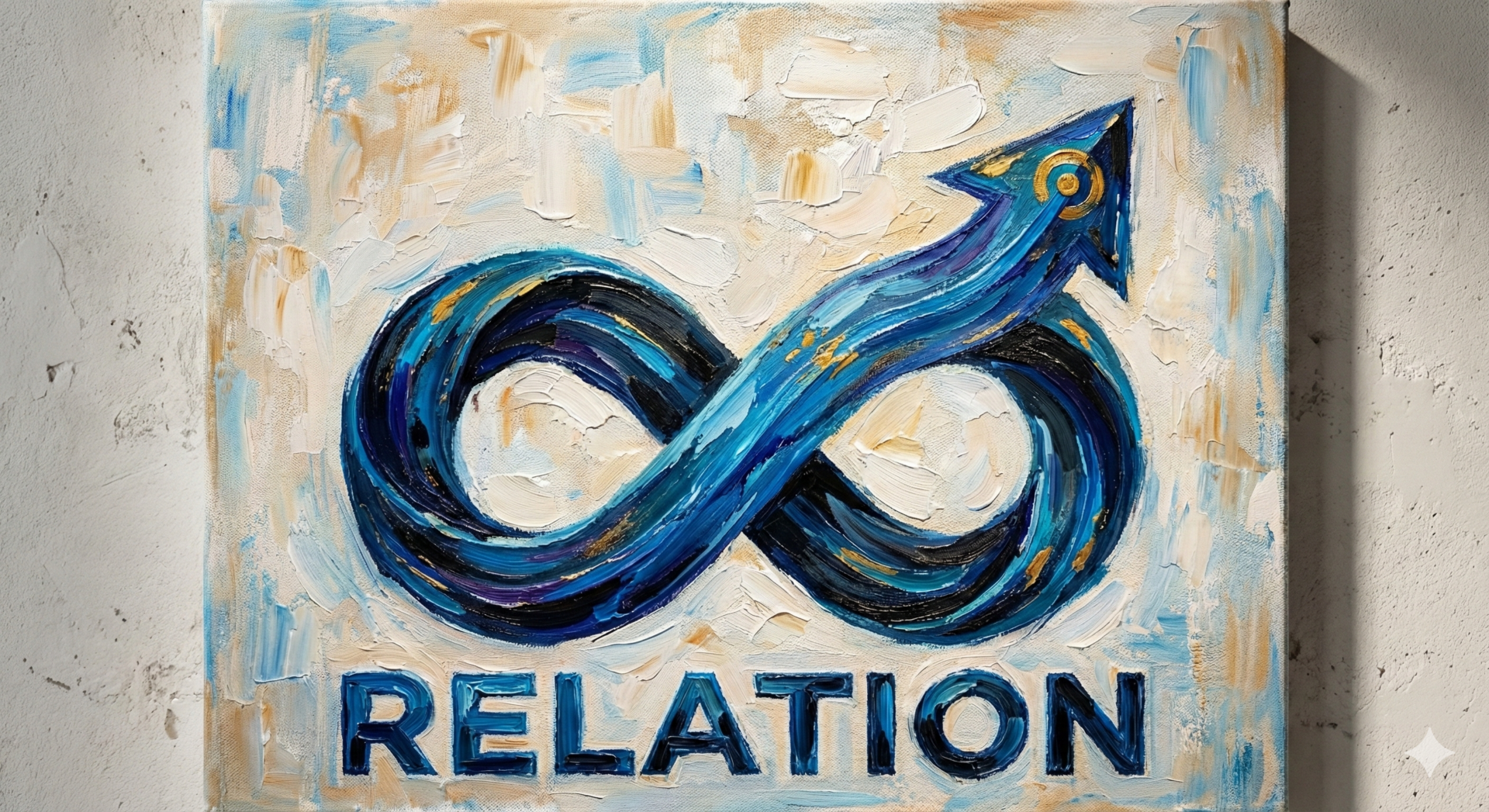
Gift-Ontology*
In a Catholic Idiom
In a Catholic idiom, a gift-ontology is not a new dogma, not a rival metaphysics set over against the Church’s doctrinal synthesis, and not a private symbolic overlay placed on top of classical theism. It is better understood as a disciplined theological-metaphysical grammar, a way of holding together what the Church already confesses under pressures that often force modern thought toward distortion. The pressure is familiar. Christians must confess that God truly acts, freely creates, truly redeems, truly sanctifies, and yet does not become. Christians must confess one God, not three gods, and yet real personal distinction. Christians must confess that creatures really act, histories really matter, and sacramental economies are real, without making God one agent among others, and without making creaturely response a condition that updates God. A gift-ontology answers these pressures by disciplined placement. Once divine simplicity, pure act, relation of origin, monarchy of the Father, and inseparable operations are fixed, where may novelty land, and how can speech remain true without smuggling in a God behind God, a unity-maker behind the persons, or a process in God?
The proposal is therefore relational ontologically speaking, but in a strictly Catholic and analogical sense. It is relational because it refuses to begin from a hidden substrate to which relations are later attached as secondary features. In God, relation is not an added link. Relation of origin is constitutive of personal distinction. The Father is from no one, the Son is eternally from the Father by generation, and the Holy Spirit eternally proceeds from the Father and the Son according to the Latin confession, while the Father remains the one principle without principle. In that sense, the one divine essence subsists personally according to relations of origin. But the relational claim must immediately be disciplined. Creaturely relationality is not identical in mode with divine relationality. In God, relation is proper, ultimate, and subsistent. In creatures, relation is real but participated, measured, and founded in created being. Thus the system is relational through and through, but not univocally so.
The first move is to recover what “first” means. God is first in the order of explanation and dependence, not first in time. If God depended on anything else to be what God is, or depended on anything else to be one, God would not be first principle. Whatever is ultimate cannot be posterior, composite, or derivative. From this follows the rejection of any unity-maker behind God. If the one God required a binder to make God one, then that binder would be explanatory prior, and God would no longer be the explanatory floor. This is why a Catholic gift-ontology must refuse every imagination of a divine substrate, property-bearer, shared component, or under-personal essence functioning as what is “really there” behind Father, Son, and Holy Spirit. God is not a thing underneath the triune names. The one God is already Father, Son, and Holy Spirit.
From first principle follows simplicity and pure act. God is pure act, with no intrinsic composition, no parts, no potency, and therefore no intrinsic change. If one models God as a subject that has properties, states, or relations in the creaturely way, one has already introduced composition. If one introduces composition, one introduces dependence. If one introduces dependence, one loses ultimacy. A gift-ontology therefore does not replace the classical confession of God as subsistent being. It disciplines how that confession is held together with the revealed grammar of Father, Son, and Holy Spirit. The point is not to add gift to simplicity as a later flourish. The point is to see what simplicity forces for every true predicate. If God gives, that predicate cannot name an acquired role, a later state, or a superadded feature. It must be true by non-composition.
That is why gift must now be stated in its more mature form. Earlier idiom sometimes spoke of the act-of-gift. What is now meant more publicly is the one simple divine actuality named under the aspect of gratuitous self-communication. God is not first a neutral divine essence and then, secondarily, a giver. Nor is giverhood constituted by creaturely reception. God gives because the one simple divine reality is already plenitude, goodness, wisdom, love, and living self-communication in itself. In Trinitarian terms, this is not an impersonal actuality behind the persons. The one divine actuality is the triune life itself, from the Father, through the Son, in the Holy Spirit. The Father is not a giver because creatures receive. The Son is not a secondary expression of a deeper essence. The Holy Spirit is not an after-link between two prior individuals. Rather, the one divine life is already personally subsistent according to relations of origin, and gift-language, when disciplined properly, names that same divine plenitude under the aspect of self-communication.
Divine freedom must then be stated with equal care. The triune life is necessary in se. The Father necessarily begets the Son. The Spirit necessarily proceeds. God necessarily knows and loves himself. None of this is the result of a choice among alternatives. But ad extra, creation, grace, missions, providence, sacrament, and glorification are free. God does not create with the same necessity by which he loves himself. Divine plenitude is not compelled overflow. Love does not imply an internal lack that needs creatures in order to be love. Thus the created world, the graced economy, and every created participation remain contingent and gratuitous. God is wholly complete without creatures. What God does toward creatures is unowed self-communication.
This leads to the central rule of placement. Once simplicity and pure act are fixed, novelty, contingency, history, and differentiation must be placed in created reception rather than in any intrinsic alteration of God. Earlier private idiom sometimes called this term-side novelty or inscription. What is now meant more publicly is this: God truly gives, and creatures truly receive. The real created effect is where novelty lands. The novelty belongs to what is created, healed, elevated, justified, sanctified, incorporated, or glorified. The divine act does not become otherwise by instituting contingent effects. The effect can be otherwise because it is freely instituted. God’s act is not internally outcome-shaped by what it causes.
This is not merely semantic caution. It is metaphysical asymmetry. Creatures have real relations to God as effects to their source. God does not acquire new real relations to creatures ad extra in a way that would introduce intrinsic novelty in God. The world can become newly related to God. God does not become newly constituted by the world. Thus names such as Creator, Redeemer, Sanctifier, and Judge are truly said of God because of real instituted effects, but their truth does not imply new divine states. This is extrinsic denomination in the strong sense, effect-grounded truth about God’s real causal presence, stated without relocating novelty into God. So when “God is Creator” becomes true because a world exists, what is new is the world. The predicate is still true of God, because the world is really from God. This is how divine agency remains real without divine becoming.
The same rule governs causality. God is primary cause, giving being and causal power. Creatures are real secondary causes. This blocks both occasionalism and same-order competition. Creatures are not mere theatrical masks behind which God alone acts, nor are they rivals occupying causal space over against God. Primary and secondary causality are different orders. God gives the field of creaturely causes, their natures, their powers, and their operations. Thus creatures genuinely act, histories genuinely matter, and creaturely response is real, but nothing on the creaturely side becomes an internal parameter or modifier of God.
All of this must remain expressly Trinitarian. The one act ad extra is not a neutral divine operation that later receives Trinitarian interpretation. It is the one inseparable operation of the Father, through the Son, in the Holy Spirit. Opera ad extra indivisa is not a scholastic ornament. It is the necessary correlate of simplicity. If God’s act is one, then external works cannot be partitioned into three separate divine acts. Yet the one act is not therefore abstract. It is personally ordered. This is where monarchy of the Father and taxis matter. The Father is the principle without principle, the Son is from the Father, the Spirit proceeds from the Father and the Son, and the one common act is manifested according to that personal order. Thus the Trinitarian grammar is not an optional decoration added onto a more generic metaphysical floor. It is built into the floor itself.
Missions and processions clarify the same truth in another register. The Son is eternally from the Father by generation, and the Holy Spirit eternally proceeds. These processions are necessary and eternal. In time, the Son is sent in the Incarnation, and the Spirit is sent in Pentecost, sanctification, ecclesial indwelling, and sacramental gift. The missions are real. They are not simply changes in our awareness. Yet they do not introduce novelty into God. Rather, they are created and historical manifestations of eternal origin. Through the economy, theology receives the names by which it speaks of God. Revelation governs metaphysics here. The Father, Son, and Holy Spirit are not symbolic constructions. They are revealed names, and the economy reveals the theology without turning God into a process.
The Incarnation and the Eucharist are then the great test cases. In the Incarnation, the eternal Son assumes a created human nature. What is new is not a new divine state, but a new created union in which the divine Son subsists personally in the assumed humanity. In the Eucharist, sacramental presence is real, but not crude localization. Christ is truly, really, and substantially present, yet not as bodies are present in place according to ordinary quantity and extension. Sacramental specification names the instituted creaturely forms under which gift is truly given. Sacramental presence names the real mode in which Christ is truly given and truly received under those signs. In both cases, the same rule holds: God gives without becoming; the created term is real; the instituted economy is real; the divine act remains simple and immutable.
This is why nature and grace remain indispensable. Nature names the creature’s received form, powers, and proportionate ends. Grace names the unowed gift by which God heals, perfects, and elevates the creature into supernatural participation in divine life. Grace is not latent possession drawn out of nature by development. Nor does it abolish created integrity. It perfects nature by exceeding it. Thus the relational character of creaturely being must never be interpreted as though the supernatural were a natural entitlement. The creature may be ordered to God and open beyond itself, but the actual participation in divine life remains wholly gratuitous. This keeps the metaphysics of gift from collapsing into a continuum.
Under this discipline, “relational through and through” can now be stated more exactly. It does not mean that creatures are nothing but relations, and it does not mean that Trinitarian relationality is exported univocally as a template for all being. It means that in God, relation is proper and unsurpassable because the one simple essence subsists personally according to relations of origin; and in creatures, relationality is pervasive because creaturely being is received, ordered, communicative, and participatory. Creatures are from God, toward ends, with others, and capable of real secondary causality and real historical development. Yet this creaturely relationality remains finite, founded, and analogical. Analogia entis is therefore the safety rail. It preserves real likeness without univocity, and real participation without collapse.
The system can therefore be summarized as a tightened architectural grammar rather than a new doctrinal content. Its guardrails are these: ultimacy, no substrate behind the persons, pure actuality, simplicity as anti-ingredient rule, analogy, non-compositional real distinction by relation of origin, one act and one will, inseparable operations, created reception as the place of novelty, no internal world-conditions in God, effect-grounded ad extra predication, non-competitive causality, missions revealing processions without divine becoming, and sacramental realism through instituted creaturely forms. What is distinctive here is not a new article of faith, but the insistence that once simplicity is fixed, every subsequent doctrine must be governed by a rule of placement. Where is novelty allowed to land? The answer is: in created reception, not in the divine act.
So the line you can actually use is this. God gives without becoming. Therefore whatever is new is new in what is given and received, not in the giver.
And if one wants the whole relational thrust in one final formulation, it would be this. God is not a network and creatures are not mere structures of relation. Rather, God is the one simple, triune actuality, personally subsistent as Father, Son, and Holy Spirit, so that in God relation is not an added link but the very mode of the one divine reality according to origin. Creatures, by contrast, remain real created beings with their own natures and integrity, whose being is received, whose life is ordered, and whose communion is participatory and analogical. Thus, being is relational through and through, but only under the difference between subsisting relations of origin in God and participated, created, and measured relationality in creatures. That is the disciplined ambition of a Catholic gift-ontology. It does not invent new dogma. It gives old dogma a stricter and more coherent architecture so that it is not silently rewritten by modern defaults.
Creaturly Relations
If placed within the broader map of positions on relations, the view here would count as a robust realism about relations, but one that significantly reconfigures the usual field of options. In the divine case, relation is neither reducible to intrinsic monadic properties nor added as a further ontological item; it is subsisting origin within the one simple essence. In the creaturely case, relations are analogical, participated, and often teleologically or institutionally thick. The resulting framework is less a contribution to the analytic problem of differential application as such than a theological metaphysics in which the deepest sense of relation is grounded in triune origin, and all creaturely relations are interpreted as finite receptions ordered by that archetype.
In Sum
In one word we get to the crux of the matter: origin.
If I had to give the single ontological notion that makes the system relational, it would be origin, more fully relation of origin.
Why that word?:
In God, relationality is not first about interaction, network, or mutual influence. It is about who is from whom. The persons are really distinct by origin, and that origin is not accidental or added. It is constitutive. That is what makes the ontology relational at the highest level.
In creatures, the parallel word is provenance. Creatures are not subsisting relations of origin the way the divine persons are, but they are still relational ontologically because their being is received, ordered, and dependent. So creaturely relationality is analogical: not origin in the divine sense, but provenance and participation.
Thus, the system here is intended to be or is relational ontologically in the sense of origin:
in God, relation of origin;
in creatures, analogical provenance by participation.
If you want the shortest possible formula:
origin in God, provenance in creatures.
*Text developed with discussions on 02.13.2026 with and via GPT 5.2 and updated on 03.09.2026 with GPT 5.4