Divine freedom, divine simplicity, and creatio ex nihilo in light of God’s relation to reality
God’s one, simple, all-sufficient act:
the interplay of divine freedom, divine simplicity, and creatio ex nihilo in light of God’s relation to reality
Wisdom 11:24–26 (New Revised Standard Version Catholic Edition)
24 For you love all things that exist,
and detest none of the things that you have made,
for you would not have made anything if you had hated it.
25 How would anything have endured if you had not willed it?
Or how would anything not called forth by you have been preserved?
26 You spare all things, for they are yours, O Lord, you who love the living.
This essay attempts to articulate a relational-first account of classical theism with an emphasis on divine freedom. Its central claim is that the most fundamental reality is a single, subsistent, tri-personal act-of-relation-as-gift and that allows one to communicate the subject at hand well. This act is identical with God’s essence, constitutes the divine persons by relations of origin, and grounds created histories by participation rather than by any further act in God. The result of this is a unified picture in which divine simplicity and freedom remain intact while creaturely contingency and secondary causality remain fully real. Once we have this all-in place, I’ll do an excursus with Karl Barth and his view on Creatio ex Nihilo to give this whole piece some depth and contrast.
On this account, the primitive is not a substrate with attached properties but one personal act: originless giving (the Father), reception-in-return (the Son), and shared fruition (the Spirit). In Thomistic terms, relations in God are not accidents; they are identical with the one essence. The traditional arity holds: two relations of origin ad intra entail their correlates, yielding four real relations without parts or composition. The same single act is God’s knowing and willing; creation proceeds through the Word and Love, not by a second auxiliary operation. Hence the metaphysical hinge Aquinas notes: as God knows all things by one simple act, “by one act also He wills all things” (ST I, q.19, a.11).
The hardest point, experientially, is freedom, well at least for me. I think most have the strong sense that different outcomes require different acts because our agency is successive, partial, and conditioned. We decide, we change, we add. Yet, in God, no such alternation is needed. The one eternal act is so simple and so fully itself that it can ground any contingent outcome without “switching” or “adding” anything. That is why classical doctrine distinguishes what God wills of necessity (Himself) from what He wills freely (anything other than Himself) without multiplying acts in God (ST I, q.19, a.3). The difference among possible worlds falls on the side of creaturely reception and specification; it does not require a second act in the Giver. The sentence that unlocks the knot is precise: no other possible created specification would have required a different act in God. If it did, the divine act would be incomplete until creatures supplied its finishing determination, which is absurd, since even the capacity to receive is itself already the effect of that one, all-sufficient act. Aquinas’s “one act” principle holds the line here.
Participation, not sequence, explains how this looks from our side. We are tempted to picture God “before” and “after” deciding to create, smuggling time into the divine life. The Catholic correction is that God is present to all things as cause, not as a part among parts: “God is in all things… as an agent is present to that upon which it works” (ST I, q.8, a.1). Eriugena sharpens the point by distinguishing God’s simultaneous “consideration” from the creaturely unfolding of effects: God “brings the nature which He considers all at one time into visible essence at certain times and places according to a certain sequence which He Himself knows” (Periphyseon I, PL 445A–B; p. 29). The upshot is an asymmetry. For us, the gift arrives as history and sequence; for God, there is only the one eternal self-gift, wholly present to each “now” without succession (cf. CCC 600). This preserves the Creator–creature distinction while explaining how contingency remains real in receivers without implying change in the Giver.
This also clarifies the interplay of divine ideas and actualization. In God there are inexhaustibly many possible modes of participation as known in the divine ideas; because creation is free, only some are made actual. God’s one act is sufficient for any such outcome He freely wills; the variety appears on the side of receptions, not as a multiplication of acts in God. Eriugena again names the identity of terminus that anchors this: “once all things have returned to [the First Cause] nothing further will proceed from it… since in it all things will be at rest and will remain an indivisible and immutable One. For those things which in the processions of natures appear to be divided… are in the primordial causes unified and one, and to this unity they will return and in it they will eternally and immutably remain” (Periphyseon II, PL 526D–527A; p. 126). Analogy names the disparity: what is given is identical in terminus—God Himself—while the reception is by proportional likeness, according to the measure and vocation of each order of being. Different histories are thus genuinely different receptions of the same Gift, not different internal operations in God.
A further worry is linguistic: does speaking of “beginning” and “end” in God smuggle sequence back into the divine life? Eriugena answers directly: “Beginning and End are not proper names of the Divine Nature but of its relation to the things which are created. For they begin from it… and since they end in it… it is rightly called by the name of End” (Periphyseon II, PL 527D–528A; pp. 126–27). In other words, “before” and “after” belong to our contemplation of created order, not to God’s inner life. That is why “the first and fourth forms of nature have been reduced to a unity” in God (II, PL 527B; p. 126). Read together with Aquinas’s principle (one act of knowledge and one act of will) Eriugena’s grammar safeguards your core thesis: the difference among possible worlds falls on the side of reception and mode, not on the side of a second act in God.
Secondary causality belongs inside, not outside, this picture. God’s all-sufficient causality does not eclipse created causes; it enables them. “God is the sovereign master of his plan. But to carry it out he also makes use of his creatures’ co-operation… For God grants his creatures not only their existence, but also the dignity of acting on their own, of being causes and principles for each other” (CCC 306). That line both protects contingency and names why our actions matter: they really contribute, precisely as participations in the one Gift.
Merit language fits the same pattern. God crowns what is truly ours because it is first His: “When God crowns our merits, He crowns nothing other than His own gifts” (Augustine, On Grace and Free Will 6.15; echoed in CCC 2009). The Church places Augustine’s sentence in the Catechism’s treatment of merit to keep together human responsibility and divine primacy without competition.
Divine simplicity forms the doctrinal guardrail for the whole account. Lateran IV confesses one God, three persons, “one absolutely simple essence.” A relational-first reading does not dilute that claim; it explicates how simplicity coexists with real personal plurality and free creative generosity. The persons are distinct by origin within one essence; creation is a free specification of the same act ad extra; and no contingent created history would have required a different act in God. That is how this relational like framework I’ve developed here (and elsewhere) avoids both modal collapse and the fiction of sequence in God while safeguarding the full reality of creaturely alternatives, causes, and merits. (Questions on Modal Collapse – RobertDryer)
Finally, this grammar of gift is not mere abstraction. It marks the way the Giver’s sufficiency shows up in the world: one act, many participations. On our side, alternatives are genuinely live because the one act can be received under many creaturely modes. On God’s side, there is no supplement, only the inexhaustible fullness of the One who knows all by one act and wills all by one act. The theological upshot is crisp: divine freedom is the unbounded sufficiency of the Giver’s simple act; divine simplicity is the identity of that act with God’s very being; creatio ex nihilo is the contingent reception of that act in diverse, proportionate modes; and the whole relation between God and reality is intelligible as participation without sequence and as causality without competition.
Excursus: Karl Barth on Creatio ex Nihilo, the Denial of Primeval Chaos, and the Christological Triumph over Tohu wa-Bohu
(What follows is a self-contained module-on Barth-that converses with it.)
Thesis:
In Church Dogmatics III/1, Karl Barth treats creatio ex nihilo not as a speculative account of “nothingness” but as a polemical confession directed against all notions of “primeval reality independent of God.” Its theological force is to preserve the Creator–creature distinction and divine freedom by excluding any co-eternal chaos or pre-existent substrate. Genesis 1:2’s tohu wa-bohu is not primal matter but the rejected “past” of the cosmos: a possibility decisively overcome in the person and work of Jesus Christ, the incarnate Word.
1. Creation wholly from God alone
Barth begins by affirming the classical content of creatio ex nihilo:
“… it can denote only the divine creation in contrast to all other: the creation which does not work on an existing object or material which can be made by the Creator into something else; the creatio ex nihilo whose Subject can only be God and no one apart from Him—no creature.”¹
2. The polemical force — denial of primeval reality
Barth stresses that Genesis contains no hint of an independent chaos, and that the doctrine’s real power is its negation of such a rival principle:
“… it may well be that the concept of a creatio ex nihilo, of which there is no actual hint in Gen. 1–2, is the construct of later attempts at more precise formulation. But its antithesis—the mythological acceptance of a primeval reality independent of God—is excluded in practice by the general tenor of the passage as well as its position within the biblical context.”²
The polemical edge is sharpened in his rejection of any pre-creation substrate:
“The first and basic question is obviously this: Does v. 2 (with or without reference to v. 1) speak of tohu wa-bohu, of darkness and flood, as a primeval condition which preceded creation, and therefore a primeval reality independent of creation and distinct from God? … The first explanation must surely be rejected. … there is nothing in the passage about a prior creation of the world in a raw or rudimentary state.”³
3. Genesis 1:2 — chaos as negated past
The tohu wa-bohu is not an eternal counterforce but the already-overcome past of creation:
“The theme of v. 2, however, is a world-state over which the Word of God had not been uttered. It is the world in a state in which it lacks the Word of God which according to what follows is the ground and measure of its reality… The state of chaos portrayed in v. 2 is not that of the primal or rudimentary state but of the past of the real cosmos created by the Word of God.”⁴
This “past” is not neutral; it is the negated possibility that God’s Word has already judged:
“God will not allow the cosmos to be definitively bewitched and demonised or His creation totally destroyed, nor will He permit the actual realisation of the dark possibility of Gen. 1:2.”⁵
4. Christological fulfillment — the decisive triumph over chaos
Barth resolves the argument in Christ, where the Creator personally enters creation to confront and overcome the tohu wa-bohu:
“And at this one point and in this one creature God is Himself the One who is judged and suffers in the place of and for the salvation and preservation of the rest of creation. This—the moment of darkness in which His own creative Word, His only begotten Son, will cry on the cross of Calvary: ‘My God, my God, why hast thou forsaken me?’—will be ‘the small moment’ of His wrath in which all that is indicated in Gen. 1:2 will become real.”⁶
“In this one creature, at this one point in the cosmos, He will manifest Himself as the Light of the whole cosmos; as the One who according to Gen. 1:1 has already acted as the Creator; as the sovereign Lord even over the primal floods, over darkness and tohu wa-bohu; as the One who really can and does leave behind this sphere; as the One who has the will and power to make of the evening and morning a new day, i.e., a transition from that past which is essential because posited by Him to the future which He has also posited.”⁷
Synthesis
The work represented by Barth here, plus my prior essay before it converge on four load-bearing claims: God is being-in-act rather than a substrate with add-ons; the Creator–creature distinction forbids any primeval counter-principle or co-eternal “stuff”; divine freedom is not a sequence of divine choices but the one sovereign act specifying creaturely histories; and the decisive hermeneutic is Christological, where the Word judges and overcomes the “dark possibility” of Gen 1:2. The principal tensions (between my relational view and Barth) arise where Barth’s polemic edges past my inclination for analogical guardrails: his rejection of the analogia entis risks flattening participation into sheer revelation-history, whereas my “identity of terminus, analogy of mode” preserves Creator–creature asymmetry without denying true creaturely likeness. Likewise, Barth’s election-in-Christ grammar can sound like collapsing decree and economy, while my aspect distinction (necessary per se ad intra, free ad extra) secures contingency without multiplying acts. Finally, Barth is wary of classical simplicity talk and under-develops sacramental ontology; yet my account insists that triune simplicity (four real relations within one act) and Eucharistic specification make the same point metaphysically and liturgically: no second act in God, one Gift received under many modes. Read this way, Barth’s “Nein” to rival principles-I hope-strengthens my thesis, and my analogical biases, and above all my liturgical frame supplies the doctrinal architecture Barth leaves implicit (as I am Catholic and Barth is not).
So, one may ask, “Why is this under the defending the principle of relationality page?” And that’s because I hope in showing that divine simplicity, freedom, creation, and redemption all proceed from the same undivided self-giving act I show a robust way to communicate the principle which is that relation is primitive. That’s what I’m really trying to constructively contribute to theology. even if I’m wrong doesn’t stop it from being constructive.
And one may ask, “Why does this matter?” Because if relation is primitive, the hypostatic union is the once-for-all relational event in which the Logos assumes a human nature into His personal act (one Person, two natures) without mixture, partition, or any “second act” in God. From that center the grammar may actually tighten: divine freedom is pure giving; human freedom is graced cooperation; secondary causality is secured (real creaturely contribution without competition); sin is misrelation (privation of right provenance); and eschatology is consummated participation (identity of terminus, analogy of mode). Thus, modes of participation is a constructive grammar whether right or wrong. Hope that makes sense. Peace!
Notes
- Barth, Church Dogmatics III/1, 16.
- Ibid., 103.
- Ibid., 102–3.
- Ibid., 108.
- Ibid., 109.
- Ibid.
- Ibid., 110.
Bibliography
Aquinas, Thomas. 1947. Summa Theologica. Translated by the Fathers of the English Dominican Province. New York: Benziger.
Augustine of Hippo. 1887. “On Grace and Free Will.” In Nicene and Post-Nicene Fathers, First Series, vol. 5, edited by Philip Schaff. Buffalo, NY: Christian Literature. (Quoted via Catechism of the Catholic Church §2009.)
Barth, Karl. 1958. Church Dogmatics, Vol. III/1: The Doctrine of Creation. Edited by G. W. Bromiley and T. F. Torrance. Translated by G. W. Bromiley. Edinburgh: T&T Clark.
Catechism of the Catholic Church. 1997. 2nd ed. Vatican City: Libreria Editrice Vaticana.
Eriugena, John Scottus. 1987. The Division of Nature (Periphyseon). Translated by I. P. Sheldon-Williams and John J. O’Meara. Montréal/Washington: Éditions Bellarmin / Dumbarton Oaks.
Fourth Lateran Council. 1990. “Constitution 2 Firmiter credimus.” In Decrees of the Ecumenical Councils, vol. 1, edited by Norman P. Tanner, 230–32. San Francisco/Washington, DC: Ignatius Press / Georgetown University Press.
The Holy Bible: New Revised Standard Version Catholic Edition. 2011. Nashville: Catholic Bible Press.
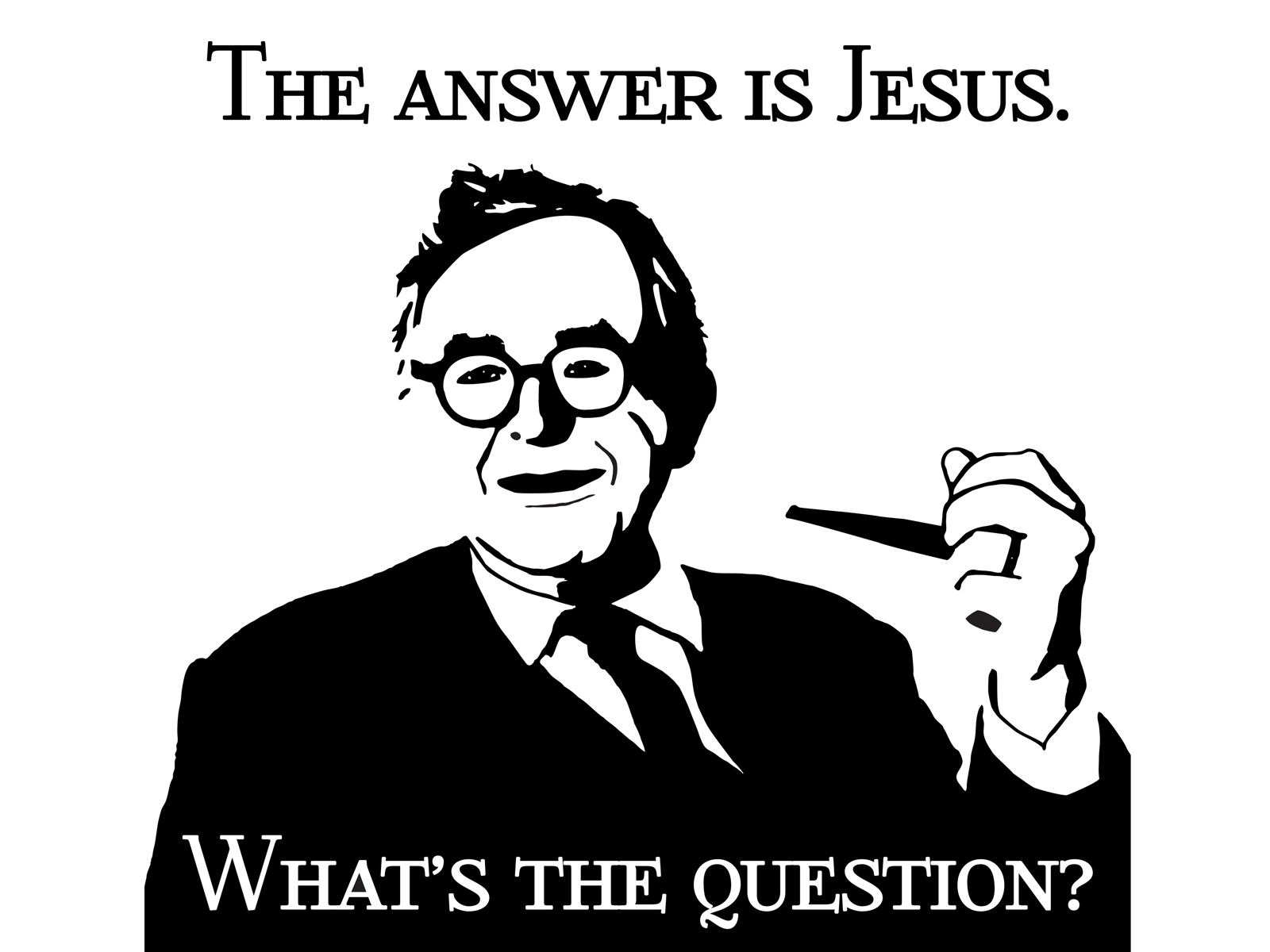
Cover image is taken from here: Is God really like Jesus? Yes! answered T. F. Torrance | The PostBarthian And without permission 🙂